

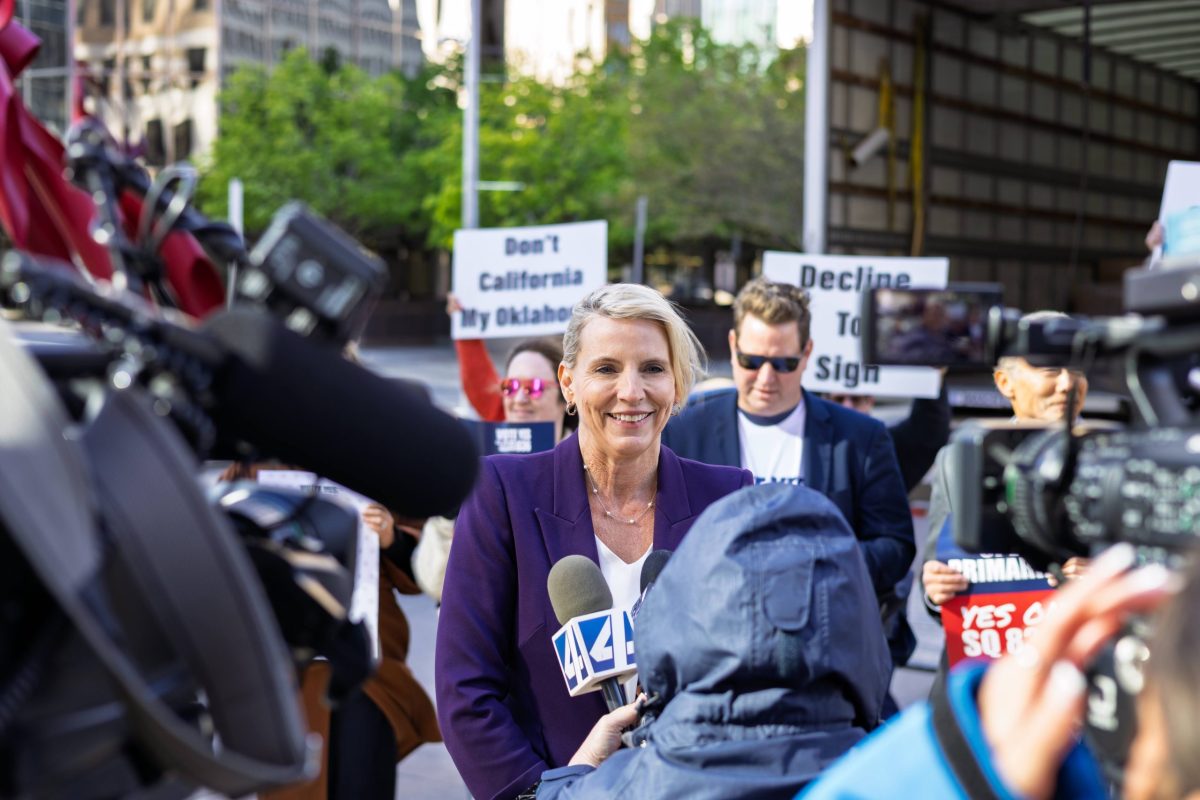

Proponents of State Question 836 launched their signature gathering effort on Wednesday, with hopes of qualifying for the ballot in 2026.
Supporters of the ballot initiative, which seeks to implement a top-two primary system where all candidates are placed on a single, nonpartisan ballot, will have until Jan. 26 to collect 172,993 signatures. Senate Bill 1027, which places several restrictions on signature gathering, won’t apply to State Question 836.
Backers of State Question 836 argue the change would moderate candidate positions and encourage more people to become civically engaged.
“Oklahomans are ready for an open primary system where every voter matters and has a voice,” said Margaret Kobos, founder of the voter advocacy group Oklahoma United and proponent of State Question 836. “We are excited to visit communities across the state to ensure every voter has a chance to sign our petition and put this initiative to a vote of the people.”
Critics maintain that a top-two primary system could leave general election voters with fewer choices and place the majority party at a disadvantage. A small group of protesters held signs at the launch rally on Wednesday, with messages such as “don’t California my Oklahoma” and “decline to sign.”
Republican gubernatorial candidate Charles McCall issued a statement on Tuesday declaring that he would “lead the fight” against State Question 836.
“This is a California-style power grab, plain and simple,” McCall said in a statement. “It’s designed to flood our elections with big money and shut out conservative voices.”
If organizers collect enough valid signatures and survive potential legal challenges, Gov. Kevin Stitt would be tasked with setting an election date. Based on previous initiative petition timelines, it’s plausible that the question could appear on the primary, runoff or general election ballot next year.
Other initiative petitions are also pending. State Question 832, which seeks to incrementally raise Oklahoma’s minimum wage to $15 per hour by 2029, will appear on the June 16, 2026 primary ballot. State Question 837, which proposes legalized recreational marijuana, must submit signatures by 5 p.m. today, Monday, Nov. 3.
Thoughts, questions or story ideas? Let me know at Kross@Oklahomawatch.org.
— Keaton Ross
Recommended Reading
- Toxic wastewater from oil fields keeps pouring out of the ground. Oklahoma regulators failed to stop it: Salt-water-laden fluid from oil and gas drilling is seeping from old wells across Oklahoma, spreading for miles and killing livestock. While hundreds of “purge” incidents were reported over several years, the state’s regulatory framework did not mandate cleanup. [The Frontier/ProPublica]
- Oklahoma lawmakers weigh options to reduce early-voting waits: Reforms considered during an interim study last week include expanded polling sites, more early-voting days and better staffing after voters experienced long wait times. State Sen. Mary Boren, D-Norman, scheduled the interim study following complaints of long wait times during the 2024 election cycle. [Oklahoma Voice]
- OSU cuts ties with associate VP after arrest for ‘internet crimes against children’: Pratul Agarwal, 51, was arrested on Oct. 25 by the Edmond Police Department for attempting to meet who he thought was a 14-year-old girl. He earned a salary exceeding $200,000 prior to his termination. [NonDoc]
Help Us Make a Difference
Oklahoma needs high-quality investigative journalism. That is our mission at Oklahoma Watch. We produce stories that hold government and public officials accountable and that make transparent what some prefer to keep secret. We depend on financial support from readers like you to sustain our coverage. Help us make a difference.

