





In a video posted to his Facebook page, Jordan Lee gives a tour of a Utah house he moved into in 2023, pointing out his riding mower, auto lift and 86-inch television.
“Do you think it’s big enough?” Lee jokes, touching the television.
Tenants who live in Lee’s Tulsa-area trailer parks have a decidedly less luxurious existence. They’re struggling with toilets that won’t flush, lights that won’t turn on, rain that falls through ceilings, and, now, higher rents. Lee, who seeks investors for his business model, recently added three Green Country properties to his multi-state portfolio. He’s hiking up rates via odd contracts while insisting vulnerable tenants lease-to-own units that aren’t habitable.
Fair View Mobile Homes
Frank Myers, 60, moved to Fair View Mobile Homes in Talala three years ago after he went through a divorce. He said upkeep at Fair View was nonexistent during his tenancy, but at least it was cheap until Lee, who is the CEO of Cash Flowing Investments, bought the property in July. Myers’ rent, for a trailer with a broken window, electrical shorts, HVAC issues and a propane leak, jumped from $540 to $750 in November, an increase of nearly 40%.

“They are nothing but thieves and scammers,” Myers said. “They are slumlords.”
Before Lee, the property was originally organized by the Wofford family in the 1980s. Edward Wofford, a sheriff’s deputy in Rogers County and a grandson of the founder, said the Woffords ran the park until they sold it to relatives Chaera and Craig Bartel in 2021.
The Bartels, who are both real estate agents, sold the property to Lee, but Chaera Bartel, who leads a Christian mission active in Africa and Asia, said she doesn’t know Lee and hired a nationwide company, NMHC Group, to offload Fair View.


According to county records, the Wofford family holds the $650,000 mortgage that Lee is paying on, at about $6,500 per month, with a 4.25% interest rate, but Edward Wofford said the family doesn’t know him and doesn’t agree with the current situation.
Fair View has 61 units and its sale listing said it brought in as much as $1,350 per unit under the previous owners, with fees for both renting a trailer and the land.

Lee’s sudden rent hike, which tenants were notified of via text message, was justified as part of a rent-to-own scheme. Oklahoma Watch spoke to several tenants at Fair View and another Lee property in Skiatook, where increases were justified by the idea that tenants would own their homes after years of hiked payments, although the hikes don’t necessarily correspond with a trailer’s proposed purchase price.
Rent-to-own, a concept meant to attract people who don’t qualify for traditional financing, should be handled with caution, according to Legal Aid Services of Oklahoma. A 2023 analysis by Business Insider showed that such contracts, which are becoming more popular, often fall in a legal gray area and most participating tenants leave or are evicted before buying.
Alyssa Hardesty, 20, said her Fair View trailer has mold, the lights don’t work in the living room, and the porches are unsafe. For that, Lee wanted $19,800 over five years. Hardesty said she begged the company to consider the state of her trailer, even sending photos, but she was served an eviction notice after refusing increased monthly payments and is now scrambling to find housing.
“I’m drowning really bad,” Hardesty said. “I’m stuck.”
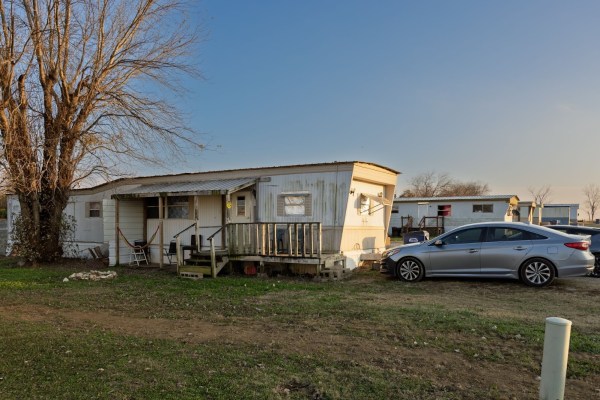
Hardesty, who said she was up-to-date on rent payments prior to the November increase, feels she has no option but to let the eviction stand.
Tonya Schondel, 38, was behind on rent and ended up in court. Schondel successfully negotiated to stay, but she and her 9-year-old son, Oakley, will end their four-year stint at Fair View soon. She can’t imagine paying $18,000 for a trailer that doesn’t have working electricity.
“I could be doing something better for us,” Schondel said. “This is not our home.”
Tulsa attorney Tracey Persons, who is one of three attorneys most active in handling evictions in the city, is overseeing Lee’s cases. Persons did not respond to phone calls placed to her employer, Tulsa Evictions.
Questionable Leases
In a copy of a Fair View lease obtained by Oklahoma Watch, the rent-to-own stipulation isn’t mentioned; tenants received documentation on that separately. But the lengthy lease agreement is likely unenforceable, said Eric Hallett of Legal Aid Services, because it repeatedly invokes Indiana law rather than Oklahoma statute. In a section that defines appropriate use, both having a candle and a guest for more than a week are grounds for speedy eviction.

“Tenant acknowledges a breach of this Section constitutes an immediate, material and incurable breach of this Agreement as well as a nuisance pursuant to Indiana law allowing Landlord to commence unlawful detainer or eviction proceedings by providing Tenant with a 3 day notice to vacate without any opportunity to cure,” the lease reads.
If the rental agreement mirrored Oklahoma’s Landlord Tenant Act, it would be enforceable, but any discrepancies in the agreement are void in favor of state law, Hallett said.
“In Oklahoma, our Landlord Tenant Act overrides anything in the rental agreement,” Hallett said.
Other questionable stipulations include forced entry without notice or emergency, a 24% interest fee compounding every month on unpaid balances or court judgments, a host of other fines, and, even though a month-to-month situation is specified, tenants must pay a year’s worth of lot rent, equalling about $4,500, if they wish to remove their personal mobile home from the property.
Hallett said these and other provisions in the lease likely violate Oklahoma law:
- A landlord cannot fine a tenant. Penalties are not allowed in contracts in Oklahoma. The landlord also cannot have high late fees or other fees that could be considered a penalty.
- An owner cannot force the tenant to pay off the lease before moving the trailer. An owner is required to attempt to re-rent the lot. If the lot is re-rented, the owner can sue the former tenant for the rent that should have been paid while the lot was empty. That is the only remedy allowed by Oklahoma law. However, this is increasingly common even in apartment leases.
- The landlord has some limited control over tenants’ guests. But the landlord cannot impose a blanket ban and cannot require tenants to register their short-term guests. The landlord has the right to make an occupant (a person not responsible for the lease) leave if the occupant breaks any rules. There could be religious or gender-based discrimination if the landlord is using registration, for example, if a landlord will not allow an unmarried woman to have a man stay overnight. The landlord cannot charge the guest a nightly fee like a hotel. The landlord can ask the guest to leave. The landlord can have rules about guests if they relate to health and safety. If the tenant violates the guest rule, they could face a lease violation and risk eviction.
- If a tenant owns their trailer, they can put whatever they want on the interior walls. The lease provided to Oklahoma Watch said that tenants must first receive the landlord’s permission to hang any large pictures or objects.
- There are no three-day notices in Oklahoma. If a tenant breaks a rule, there is a 10-day notice with an opportunity to cure.
- Entering a tenant’s unit requires at least one day’s notice. The tenant can refuse if it is reasonable to do so. It may not be reasonable for a landlord to enter a tenant’s unit.
Lee boasts a portfolio of properties in six other states: Indiana, Texas, Iowa, Idaho, Missouri and Arizona. Lee’s brother, Robert, is a co-founder. The company’s only other listed employee is Taylor Mower, who told Oklahoma Watch that any illegalities in the lease had been corrected but refused to send an updated document. He and the Lees otherwise declined to comment, except to say that CFI only evicts people for nonpayment of rent or lease violations, and that leases are meant to protect both tenants and owners.
Tenants at Fair View knew a company called CFI owned the property, but they weren’t familiar with the Lees. They reported talking on the phone with a woman in Indiana, Ayla Doyle, and interacting with a local woman named Catherine.
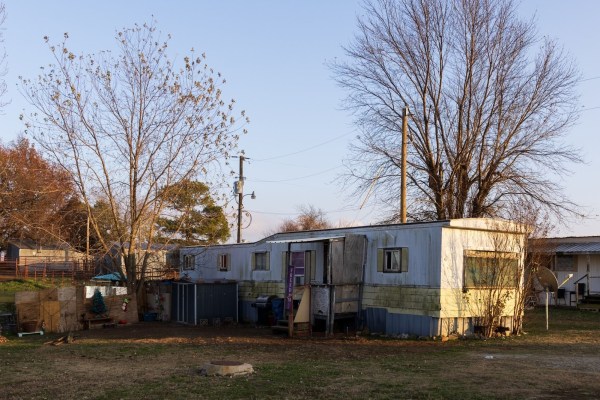
CFI is a Limited Liability Company, which limits statutory obligations for the property owners if a tenant sues; it is a common structure used by landlords. Should a tenant bring about a lawsuit, the owner could only be sued for the properties listed under the LLC. Typically, a landlord will file for an LLC for each individual property in order to better protect themselves in the case of a lawsuit.
It is very common for bigger landlords and property investors to form an LLC, said Anthony Flores, research director of Oklahoma Policy Institute.
“LLCs provide a number of benefits such as reducing legal liability, tax advantages, splitting ownership among partners and remaining anonymous,” Flores said. “For some property owners, remaining anonymous is the biggest advantage of an LLC, while for others it’s an unintended side effect.”
The anonymity provided by LLCs can make it harder for tenants to identify and contact the true owner of the properties.
“It can hurt cities attempting to enforce building code violations or to declare a property as a hazard,” Flores said.
Lee also solicits investors who may not be aware of how he does business. On Lee’s website and social media, he advertises for wealthy and foreign contributors while promising healthy returns.
While Lee pursues more wealth, Fair View tenants such as Frank Myers are trying to figure out what their lives will look like. Myers said he plans to withhold rent in protest, but the lack of options is a worry.
“There’s no other place around here that’s affordable,” Myers said.
Ed. Note: This story was updated on Dec. 17, 2025, to correct the identity of Edward Wofford’s current employer and to correctly identify CFI as a Limited Liability Company.

Elizabeth Caldwell is a Tulsa-based journalist and contributor to Oklahoma Watch. Contact her at caldwell07@sbc.edu
MORE FROM ELIZABETH CALDWELL

“Destroy to Fix”: Former Lawyer’s Aggressive Tactics Target Oklahoma School District Amid Assault Claims
Supporters contend Ronald Durbin’s aggressive, inflammatory social media tactics are just what’s needed to hold power to account. But parents say his allegations are exaggerated, his demeanor disrespectful and his intent nefarious. Durbin’s mission, he said, is to destroy public education.
Families Outraged After former OSU Official’s Son Spared Prison in Sexual Assault Case
A Stillwater teenager was convicted on 11 counts of sexually related crimes that carried sentences totalling 78 years if served consecutively. A plea deal got him counseling and supervision for less than a year, causing a community outcry.

Inside the Facebook Groups Changing Dating in Oklahoma
“Are We Dating the Same Guy?” groups help women in Oklahoma and beyond share anonymous warnings about men in the dating scene, offering safety tips, support, and sometimes exposing predators. However, critics argue the format risks defamation and lacks accountability, sparking backlash from men and raising legal and ethical concerns.

Jake Ramsey covers evictions, housing and homelessness. Contact him at (405) 370-3798 or jramsey@oklahomawatch.org.
MORE FROM JAKE RAMSEY

Inside a High School Project Tackling Homelessness
High school students at Vanguard Academy in Broken Arrow spent a semester researching homelessness and working with community partners across Tulsa. Their projects included a food drive, coat drive and an educational video.

SNAP Cuts Contributed to Evictions Across Oklahoma
During the government shutdown, when SNAP benefits were cut, many tenants found themselves forced to choose between paying rent and buying food. In the case of Kori Petty, she chose food. This caused her to be behind on her rent, and she was evicted.

Grimm Eviction Highlights Legal Representation Gap
Barbara Grimm was evicted after several disputes with her landlord. The first time around, the landlord had filed the improper paperwork, and an attorney caught it. The second time, she was not represented and signed a judgment before going before the judge. The attorney said that if more tenants were represented and able to go…

