



Nearly half of Oklahoma households struggled to afford necessities in 2023, according to a new report. The limited income of 45% of households in the state has priced many families out of their homes, contributing to the state’s eviction crisis.
Sixteen percent of Oklahoma households’ incomes were below the Federal Poverty Line, and 29% were considered Asset Limited, Income Constrained, Employed households, according to the report. ALICE households are those that earned above the poverty line, but still struggled to afford necessities.
A shortage in affordable housing in Oklahoma, combined with one-fourth of Oklahoma renters having met the qualifications to be considered extremely low-income, has left nearly half of renters cost-burdened.
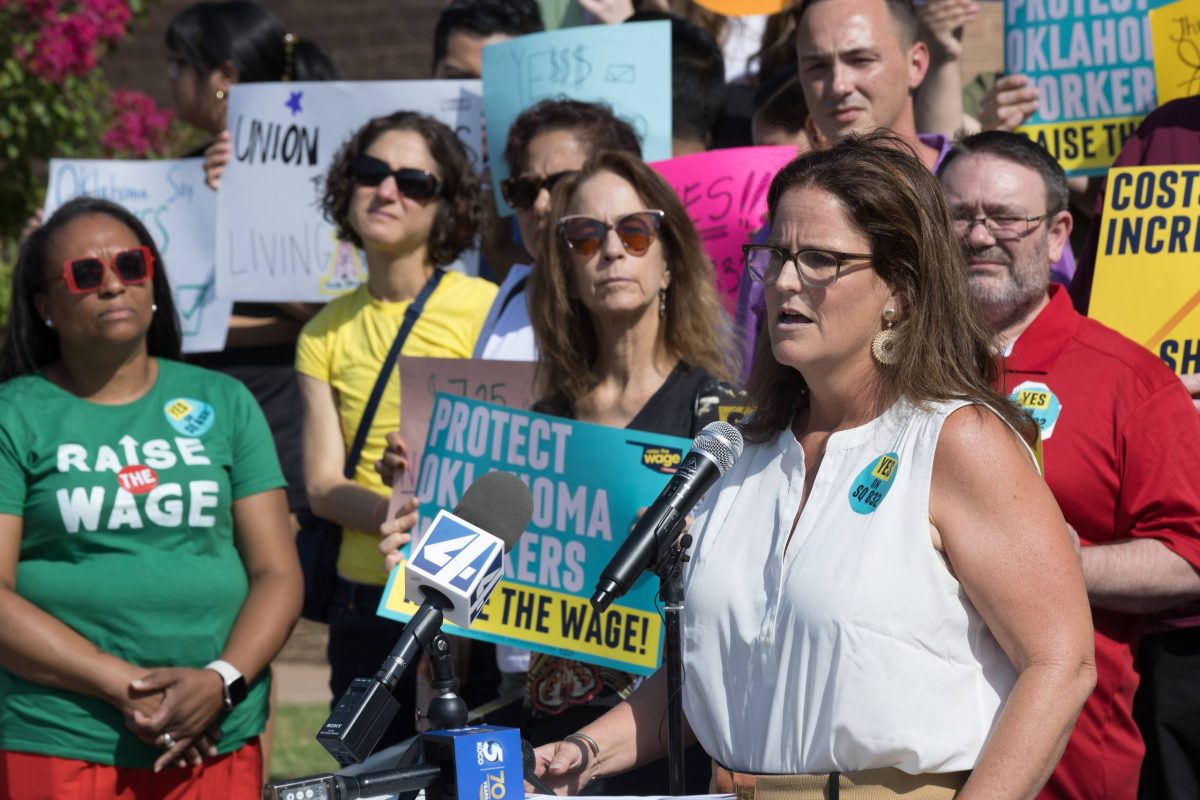
Housing experts and economists said that raising the minimum wage would help mitigate the state’s eviction rates.
“Increasing the minimum wage in Oklahoma would likely reduce evictions by giving low-income renters more income,” said Brent Norwood, an assistant professor of economics at the University of Oklahoma.
State Question 832, which goes before voters in June, would raise the state’s minimum hourly wage in stages from $7.25 to $15 by 2029.
ALICE
The recent ALICE study found that workers living in the threshold just above the Federal Poverty Line are typically child-care providers, food service workers, cashiers and delivery drivers.
The most common jobs within the ALICE threshold have a median hourly wage of less than $15 per hour, with many at the $7.25 minimum.


“We are a low-cost-of-living state, compared to the rest of the nation; however, it is important to keep in mind that we are also a high-poverty state,” said Sabine Brown, senior policy analyst on housing for Oklahoma Policy Institute.
Oklahoma has the eighth-highest poverty rate in the United States.
“Raising the minimum wage will alleviate evictions,” Norwood said.
To afford a two-bedroom rental at fair market value, a minimum wage worker would have to work 116 hours per week. The U.S. Bureau of Labor Statistics estimated that in 2024 about 1.7% of workers age 16 and older — approximately 17,000 people — were paid minimum wage or less. Tipped employees in Oklahoma may be paid as little as $2.13 per hour in cash wages if the addition of tips brings their hourly rate to at least $7.25.
“A broken car, a medical emergency, a missed shift can quickly push someone towards an eviction or even homelessness,” Brown said. “Raising the minimum wage can help provide more of a buffer so people aren’t on the brink of eviction or homelessness.”
Minimum Wage
It has been 16 years since Oklahoma’s last minimum wage increase, which raised the rate from $6.55 to $7.25. Since that increase, rents have risen by 60%, making rentals out of reach for low-income renters.
Two people working full-time on Oklahoma’s minimum wage can’t afford a two-bedroom rental home at fair market value without exceeding the recommended 30% of income to be spent on housing, according to Oklahoma City’s 2025 Point in Time report.
A 2022 study in the Journal of Urban Economics found that when states raised their minimum wage, renters became 10.6% less likely to default on rent, meaning the tenant is less likely to miss a rent payment with a higher minimum wage.
However, a raised minimum wage could bring about rent increases. Landlords facing a boost to the local housing demand may capture more earnings by raising rent, according to a study conducted by the Federal Reserve.
“Rent inflation really depends on the housing supply, so that means how easily landlords can raise rents,” Norwood said. “People bring up rent inflation a lot, but rental prices are going to increase no matter if we change the minimum wage or we don’t.”
Norwood said if there were more public spending on affordable housing, it would affect landlords’ ability to raise rent.
The National Low-Income Housing Coalition found that Oklahoma had just 38 affordable homes available per 100 extremely low-income renters in the state, fewer than last year’s 42. That’s slightly better than the national average of 35 affordable and available housing units per 100 renters.
“I don’t think raising the minimum wage is going to fix everything, but it is a necessary step to make sure that people can afford something as basic as housing,” Brown said.
Wage increases should be included in a broader strategy, Norwood said.
“It’s that supply, that stock of affordable housing that we need,” Norwood said. “Support systems like rental assistance, legal aid, counseling and policies like rent control, eviction timelines, tenant protections, they often need to accompany these wage increases to be really effective.”

Jake Ramsey covers evictions, housing and homelessness. Contact him at (405) 370-3798 or jramsey@oklahomawatch.org.
MORE FROM JAKE RAMSEY

Inside a High School Project Tackling Homelessness
High school students at Vanguard Academy in Broken Arrow spent a semester researching homelessness and working with community partners across Tulsa. Their projects included a food drive, coat drive and an educational video.

Trailer Park Owner Hikes Rents, Forces Tenants Into Rent-to-Own Deals
Tenants who live in Jordan Lee’s Tulsa-area trailer parks have a less-than-luxurious existence. They’re struggling with toilets that won’t flush, lights that won’t turn on, rain that falls through ceilings, and, now, higher rents. Lee, who seeks investors, recently added three Green Country properties to his multi-state portfolio. He’s hiking up rates via illegal contracts…

SNAP Cuts Contributed to Evictions Across Oklahoma
During the government shutdown, when SNAP benefits were cut, many tenants found themselves forced to choose between paying rent and buying food. In the case of Kori Petty, she chose food. This caused her to be behind on her rent, and she was evicted.

